A lot of women in Dubai want to learn to swim and keep putting it off. Sometimes it’s nerves about the water. More often it’s everything around it: what to wear, who’ll be watching, whether everyone else will already know what they’re doing.
If that sounds familiar, this guide walks you through what a first ladies-only swimming lesson is actually like, from packing your bag to the moment you let go of the wall.
Why choose a ladies-only swimming class?
For many women, it’s simply about comfort. In a ladies-only pool there are no men in the water or on the poolside, and the coach and lifeguards are women too. That makes it much easier to relax, and relaxing is half of learning to swim.
It also means you can wear what you’re comfortable in, ask questions without feeling awkward, and focus on your lesson instead of who’s around you.
Before your first lesson
What to wear
Wear swimwear you feel comfortable moving in. In a ladies-only pool, many women wear a regular swimsuit; others prefer a burkini or full-coverage swimwear [VERIFY: club swimwear policy]. Whatever you choose, it should be made for swimming. Cotton T-shirts and leggings get heavy in the water and make floating harder.
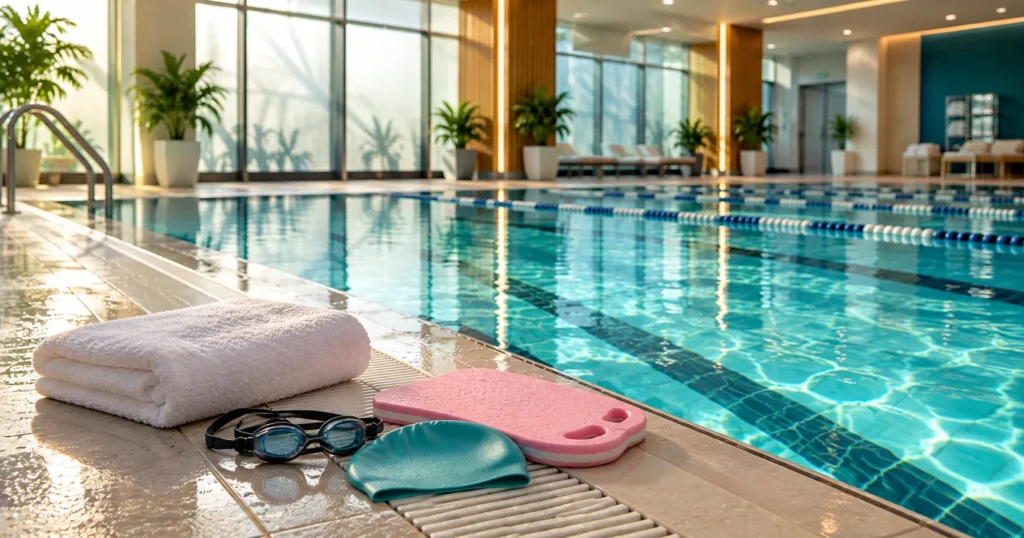
A swim cap keeps long hair out of your face, and goggles help a lot when you’re learning to put your face in the water.
What to bring
- Swimwear, cap and goggles
- A towel and flip-flops for the poolside
- Toiletries for the shower afterwards
- A water bottle (you sweat in the pool, even if you don’t notice)
Eat something light an hour or two before, not a big meal straight before getting in.
Tell your coach about your health
If you’re pregnant, have a heart or breathing condition, epilepsy, or have had recent surgery, tell your coach before you start, and check with your doctor first if you’re unsure.
What happens in your first lesson
Every coach works a little differently, but a first lesson for a beginner usually follows the same path.
Getting comfortable. Your coach will ask about your experience and anything that worries you. Some women have never been in a pool; others swam as children and lost their confidence. There’s no wrong answer, and nobody expects you to swim a length on day one.
Getting in. You’ll start in shallow water where you can stand comfortably, holding the wall. Just walking and moving your arms in the water is a normal first step.
Breathing. This is the big one. You’ll practice breathing out slowly through your nose or mouth with your face in the water, usually by blowing bubbles. It sounds simple, but most of the panic people feel in water comes from holding their breath. Once breathing feels calm, everything else gets easier.
Floating. With your coach supporting you, you’ll learn to float on your front and your back. This is often the moment it clicks: the water really will hold you up if you let it.
Kicking. Holding the wall or a float board, you’ll practice a steady kick from the hips. By the end of a first lesson, many women can glide a short distance holding a board.
That’s usually enough for one session. You’ll leave tired, probably a bit proud, and already less nervous than when you arrived.
“I’m scared of the water.” Is that normal?
Completely. A fear of water is one of the most common reasons adults never learned, and a good coach has taught many nervous beginners before you.
The key is going at your own pace. If you need three lessons before you’re happy putting your face in, that’s fine. One of our members wrote that they started as a nervous beginner and were swimming after six one-to-one classes. Not everyone moves at that speed, and that’s fine too.
If your fear is strong, private lessons are usually the better start. With no one else in the class, the coach can focus entirely on you.
Group lessons or private lessons?
Group lessons are more social and cost less per session. They work well if you’re fairly relaxed in the water and happy to learn alongside others.
Private lessons suit you if you’re very nervous, want to progress faster, or have a specific goal, such as fixing your stroke or building up to swimming laps for fitness.
Some women start with a few private sessions to build confidence, then join a group.
How long does it take to learn to swim?
It varies a lot. It depends on how comfortable you are in water to begin with, how often you swim, and whether you practise between lessons. Most adults feel noticeably more confident within a few weeks of regular lessons. Swimming a full length comfortably usually takes longer.
Two lessons a week, plus a short practice swim on your own if you can, tends to work better than one long lesson a week.
Swimming lessons for women at Zarya Wellness Health Club, Al Qusais
At Zarya Wellness Health Club on Damascus Street, Al Qusais, our ladies-only swimming pool is a completely separate space for women, with female coaches and female lifeguards. It’s open every day from 6:30 AM – 11:30 PM, so you can fit lessons around work, school runs or family time.
We offer ladies-only swimming classes for beginners and improvers, and private swimming lessons if you’d prefer one-to-one coaching. Private lessons are AED 199 per session or AED 1,499 for 10 sessions. You can also choose semi-private or small-group sessions.
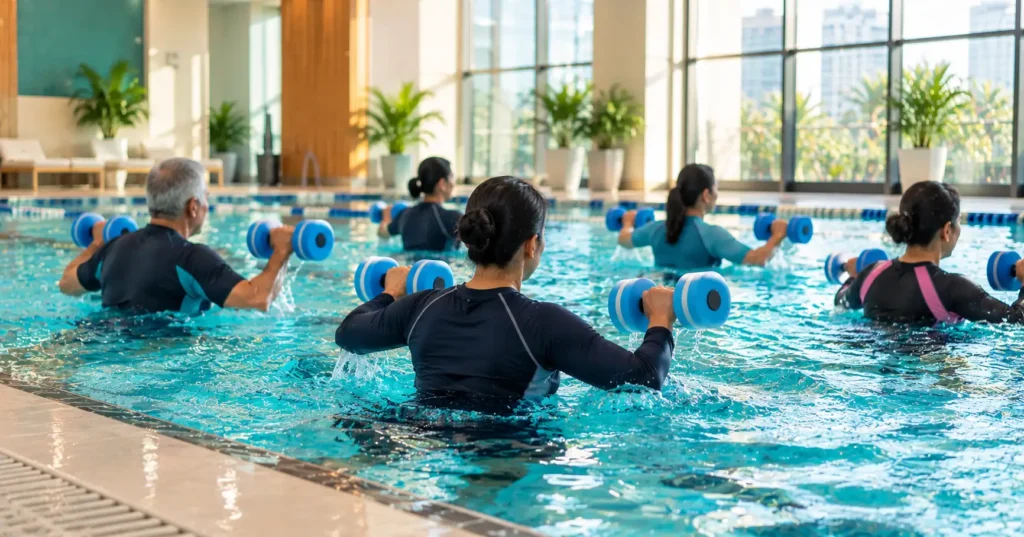
Once you’re comfortable in the water, our aqua fitness classes are a fun, low-impact way to keep fit in the pool.
Nervous about your first lesson? Message us on WhatsApp and we’ll answer your questions before you book.