Muscle Recovery After a Workout: What Actually Helps
You get stronger after the workout, not during it. Learn how sleep, food, water, active recovery, stretching and a sauna session help your muscles recover properly between hard strength sessions.
Oct 8, 2026 · 0 Comments
Here’s something most people only learn after a few months of lifting: the workout is only half the job. Training gives your body a reason to get stronger, and recovery is when it actually repairs and adapts. Cut the recovery short, and the progress slows down with it.
Good recovery comes down to a handful of basics: enough sleep, enough food and water, easy days between hard ones, and a training plan your body can keep up with. Saunas and jacuzzis are pleasant extras, but they sit on top of those basics, not in place of them.
Why does recovery matter so much?
A strength session deliberately puts your muscles under more stress than they’re used to. Over the following days, your body repairs that tissue and adapts so it can handle the load next time. With consistent training, good food and enough rest, that’s what builds strength and muscle.
Train hard again before you’ve recovered, and fatigue starts to stack up. Your lifts stall, sessions feel heavier than they should, and the risk of a strain goes up. Most people who hit a plateau aren’t training too little. They’re recovering too little.
How much rest you need depends on how hard you train, how experienced you are, and how well you sleep and eat. There’s no single right number, so watch how your body responds.
Sleep: the part nobody wants to hear about
It’s not exciting advice, but it matters more than anything else on this list. The CDC recommends that adults aged 18 to 60 get 7 or more hours of sleep a night.
If you train in the evening, as many people in Dubai do after work, it’s easy to get home wired at 10pm and scroll until midnight. A few habits help:
Go to bed and wake up at roughly the same time every day
Put the phone away for the last half hour
Keep the bedroom cool and dark
Skip caffeine late in the day if it keeps you up
If you still sleep badly after a few weeks of this, it’s worth speaking to a doctor.
Food and water, especially in Dubai’s heat
Protein gives your body what it needs to repair muscle. Carbohydrates refill the energy stored in your muscles, and healthy fats round out a balanced diet. You don’t need anything complicated: eggs, chicken, fish, dal, yoghurt or paneer at your regular meals covers most people. What you eat across the whole day matters more than racing to eat within minutes of finishing a set.
Water is the one people underestimate here. You sweat more than you realise, even in an air-conditioned gym, and more again if you’ve walked across a hot car park in August. Drink steadily through the day, not just during the session, and consider an electrolyte drink after long or very sweaty workouts.
Dark urine can be a sign you’re behind on fluids, though it isn’t a perfect test. If you ever feel dizzy, weak or sick while training in the heat, stop, get somewhere cool, and get medical help if it doesn’t pass. If you’d like a nutrition plan built around your training, a qualified nutrition professional or our wellness consultant can help.
Active recovery: rest days don’t have to mean the sofa
Active recovery means light movement on the days between hard sessions: a walk, an easy swim, gentle cycling or a relaxed yoga class. Many people find it leaves them less stiff than a day of doing nothing.
The key word is easy. You should be able to hold a conversation the whole time. Good options include:
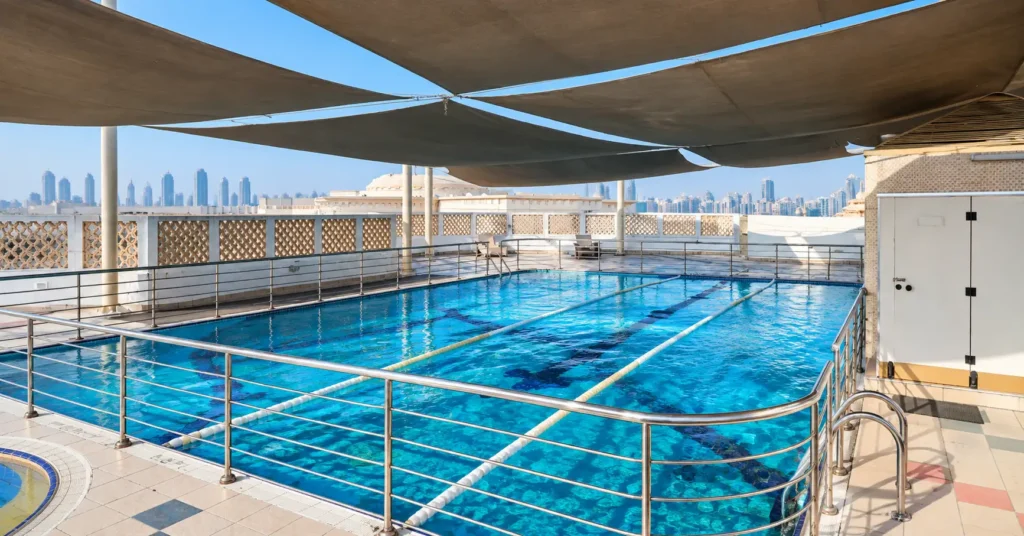
A relaxed swim: the water takes your weight, so it’s gentle on sore joints
A 20 to 30 minute walk
Light cycling: low resistance, no racing
Gentle yoga
One or two easy days a week suits most people. If you’re unusually tired, unwell or in real pain, a full rest day is the better choice.
Stretching: before and after are different
Stretching is useful, but it isn’t a magic recovery tool. The research doesn’t show that stretching after a workout reliably reduces soreness or speeds up recovery. What it does well is keep you flexible over time. Here’s how to use it.
Before training, use dynamic movements. Leg swings, arm circles and walking lunges, plus a few minutes of gradually harder effort, prepare your body for the session ahead.
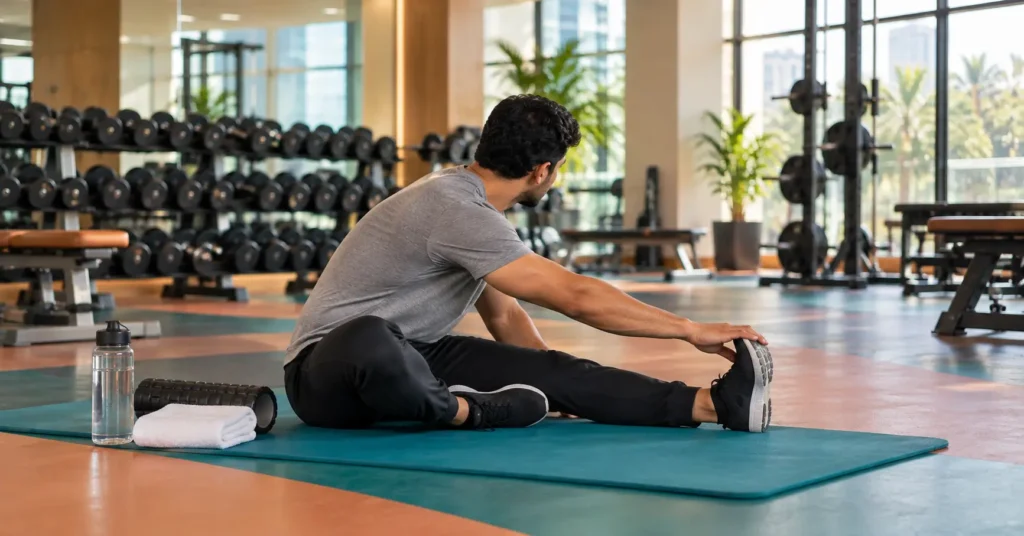
After training, use static stretches if flexibility is a goal. Hold each one for about 20 to 30 seconds without bouncing.
On rest days, try mobility work. Slow, controlled movements like hip circles and thoracic rotations help, especially if you sit at a desk all day.
A stretch should feel like mild tension, never sharp pain.
Do saunas and jacuzzis help with recovery?
Many people love a sauna or warm jacuzzi after training. The heat is relaxing and can ease the feeling of tight muscles for a while. But the research hasn’t shown that it actually speeds up muscle recovery, so treat it as a way to unwind, not a substitute for sleep and food. Sweating more doesn’t mean you’re recovering more.
If you do use the sauna after a workout:
Start with short sessions and follow the facility’s guidance
Drink water before and after
Get out straight away if you feel dizzy, weak or sick
Skip it if you’re already light-headed or dehydrated
Check with your doctor first if you’re pregnant, have a heart condition or blood pressure concerns
Signs you’re not recovering enough
Your body usually warns you before an injury does. Look for patterns, not a single bad day:
Tiredness that drags into your daily life
Lifts going backwards over several sessions
Soreness that isn’t easing when it should
Sleeping badly despite feeling exhausted
Losing interest in training you normally enjoy
Small aches that keep coming back in the same place
If several sound familiar, take an easier week: lighter weights, fewer sets, and a close look at your sleep and food. These signs can have other causes too, so see a doctor if they don’t improve.
Get medical help quickly if you have severe or worsening muscle pain, significant swelling, unusual weakness, or dark, tea-coloured urine after an intense workout.
What a balanced week can look like
Here’s one example for someone lifting three times a week. Treat it as a starting point; your coach should adjust it to your experience and goals.
Day
Plan
Monday
Strength session, stretching after
Tuesday
Easy swim or walk
Wednesday
Strength session
Thursday
Yoga or mobility work
Friday
Strength session, then the sauna to wind down
Saturday
Family swim or a long walk
Sunday
Full rest
If you’re new to training, build up gradually instead of jumping straight into a demanding plan
Recovery at Zarya Wellness Health Club in Al Qusais
We built Zarya Wellness Health Club on Damascus Street around the idea that recovery is part of training, so most of what’s in this guide is under one roof.
Our yoga coach Pooja runs core yoga classes and one-to-one sessions, and specialises in flexibility. If you’d like a plan that brings training, nutrition and stress together, our wellness consultant offers one-to-one sessions.
Zarya is an extension of Kottakkal Ayurvedic Medical Centre, and annual members get a free consultation and 20% off Ayurvedic treatments there.
Around 48 hours before training the same muscle group hard again is a good starting point. It isn’t a fixed rule: adjust it to how hard you train and how you feel. You can still train on back-to-back days by working different muscle groups.
One or two easy days a week suits most people. Keep it genuinely light, such as a relaxed swim, a walk, gentle cycling or easy yoga. If you’re unwell or very tired, take a full rest day instead.
Both, in different ways. Use dynamic movements like leg swings and lunges to warm up before training. Static stretches after training help your flexibility over time, but they won’t reliably prevent soreness.
Many people find it relaxing, and it can ease the feeling of tight muscles for a while. Research hasn’t shown it speeds up recovery, though. Keep sessions short, drink water, get out if you feel unwell, and check with a doctor first if you’re pregnant or have a heart condition.
A sauna uses dry heat, and a steam room uses moist heat. Neither has been shown to beat the other for recovery, so choose the one you find comfortable and keep it short. Zarya Wellness Health Club has a sauna and jacuzzi for members.
The CDC recommends 7 or more hours a night for adults aged 18 to 60. If you train hard, consistent sleep matters more than any supplement.
Yes, at an easy pace. The water supports your weight, so it’s gentle on joints that are sore from lifting. A walk or full rest works just as well if you prefer.